
The Alberta Minn story
In 1959 Robert's father rode his palomino, Alberta Minn, 1,500 miles from Calgary to Rush, Colorado, on $4 and the kindness of strangers. Then she beat every runner up Pikes Peak.
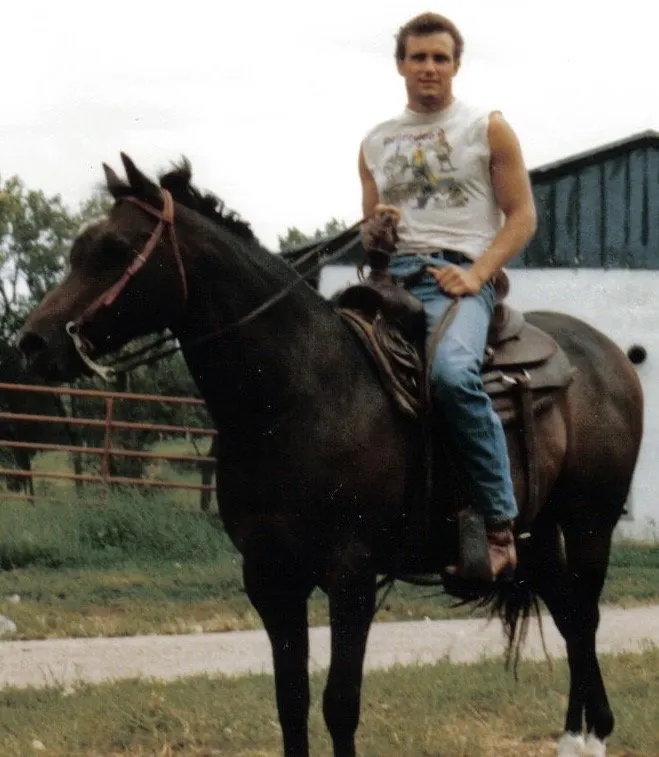
1,500 miles from Calgary, Alberta, Canada to Rush, Colorado
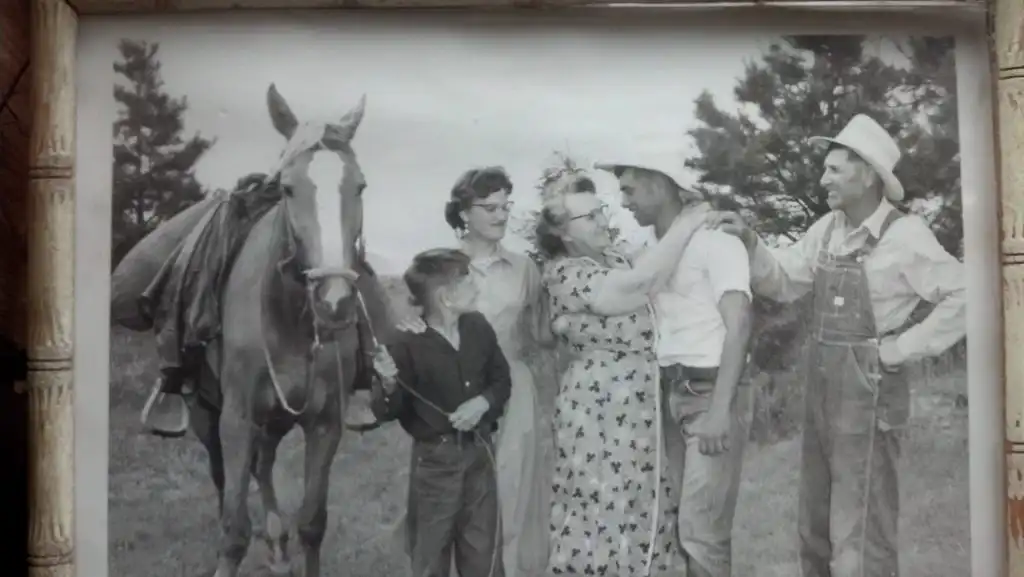
My father, Robert Rapp Sr., grew up at a time in Southeast Colorado where the Old West still existed. Cattle roundups and branding, bean planting and harvest. A handshake was your word, and you might drive 50 miles just to see a doctor.
Dad worked his father's farm and ranch, but he was restless. He was a good ballplayer, and when baseball didn't work out, he started riding saddle broncs and bulldogging on Sundays up in Woodland Park. In the summer of 1958 he and two friends decided to follow the rodeo circuit all the way to Canada, where they figured the competition wasn't quite as tough. They won enough to keep themselves afloat.
When the season wound down in Calgary, his friends headed home. Dad stayed a few more days. His father had always told him the only money he'd ever send for rodeoing was a bus ticket home. Dad was standing in the Calgary bus station buying that ticket when a Danish fellow struck up a conversation. "I know a Scotsman that needs some horses broke," he said.
The Scotsman was Jim Murray, who milked about 600 cows and ran beef cattle up in the hills. He was well off and tight with his money. "I'm not going to pay you till you prove yourself," he told Dad on the phone. That afternoon Jim's wife picked up a young stranger at his hotel on nothing more than his word.
The horse nobody could ride
The next morning they brought the horses in. One stood out, a five-year-old palomino mare. She'd been broke, they said, but every man who tried to ride her got bucked off.
"Well," Dad said, "that'll be the first one I try."
The hired men lined the fence waiting for her to throw him. Dad figured he knew what had gone wrong. They had climbed on with chaps and spurs, trying to look like cowboys, and spurred her until she fought back. He saddled her and got on like he would a bronc. She never bucked. He had them open the gate and took her out.
I couldn't believe how well she handled. I could turn her on a dime and she'd walk. Oh, she could walk.
Listen: Robert Rapp Sr., in his own words. Recorded March 1, 2009.
By the end of that ride, in his words, "I kind of fell for her."
Jim called her Minn. Dad added the Alberta.
He spent the winter breaking horses for the spring sale in Calgary. He helped on the dairy, drank beer with Jim, and on Saturday nights stepped into the boxing ring in town for $15 a fight. "Some of the crowd was always glad when I got in the ring," he said. Whenever he could, he saddled Alberta Minn.
Why don't you ride her home?
One day Dad told Jim that if he had the money to ship her home, he'd buy her. "Buy her at the sale," Jim said. "Why don't you ride her home?" The more Dad thought about it, the more it grew on him.
At the spring sale, after the horses he'd broke went through the ring, he bought Alberta Minn for $132. He had enough money to ship her. He'd already made up his mind to ride.
On the morning of May 14, 1959, he saddled her up and headed south. Jim had called the newspaper, and a photographer was waiting on the street in Calgary to get their picture.
1,500 miles of hospitality
That first night he stopped near High River at the place of a man who kept a rodeo string. The man tried to buy the horse and then offered to haul them partway. Dad turned him down both times. The man's 12-year-old son would grow up to be a champion saddle bronc rider.
Fences made it hard to cut across country, so they kept to the back roads, where the spring grass grew early in the ditches and Alberta Minn could graze as they went. A Dutchman took them in the second night and got the story into the paper. After that, people started finding him. Folks would stop along the road, having read about the trip, and say, "Now you come to my place tonight." The papers said he was out to test Western hospitality. It passed.
In Lethbridge he stayed an extra day, partly because the rancher he was staying with had a pretty daughter. He crossed into Montana, slept a night in the sale barn at Shelby and rode on to Great Falls. From there the route bent well east to Miles City before turning south through Broadus. Somewhere past Broadus, near the Montana and Wyoming line, in desolate oil and sheep country, he rode into a sheep camp. One of the men there had lost a hand working the oil rigs. They took him into a one-street town with a hotel, a restaurant and a bar on election night, and the next day he rode in the rain from morning to night until another sheepherder put him up.
Everywhere he stopped, people fed Alberta Minn grain and hay before he could ask. A grain elevator gave him half a sack of oats and wouldn't take a dime for it. He picked up pop bottles along the road, cashed them in for two cents apiece and traded them for candy in the next town. Most nights he had a bed in a spare room and Minn had a barn.
I spent $4 in 46 days.
Listen: Robert Rapp Sr., in his own words. Recorded March 1, 2009.
They covered about 30 miles a day, and he never once galloped her. "I didn't want to wear her out, and I didn't want to hurt her." She walked nearly the whole way and wore out a set of shoes halfway home. In the mornings he'd step out of whatever house he'd slept in and call to her, and she'd nicker and come to him.
She was sensitive, but she and I got to be tremendous friends because we spent every day together for 46 days.
Listen: Robert Rapp Sr., in his own words. Recorded March 1, 2009.
From Cheyenne he turned east to stay clear of Denver, cut south past Colorado Springs and crossed Highway 24. From there he knew every road. Forty-six days after leaving Calgary, he rode into his folks' place at Rush.
Up Pikes Peak
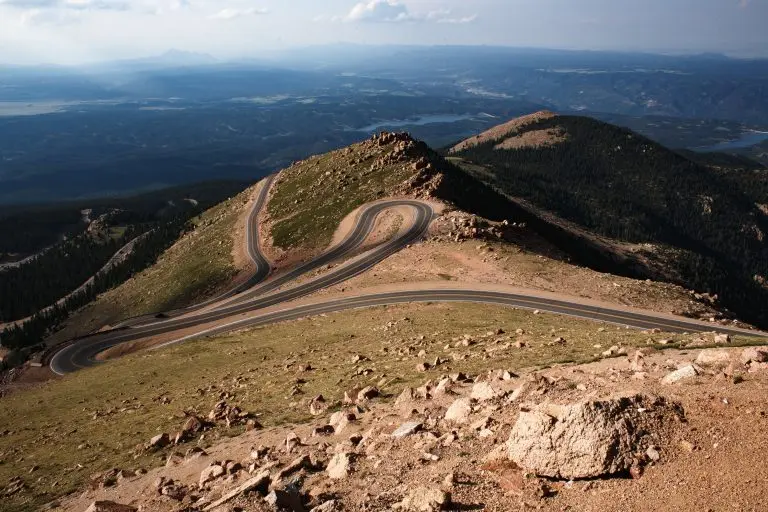
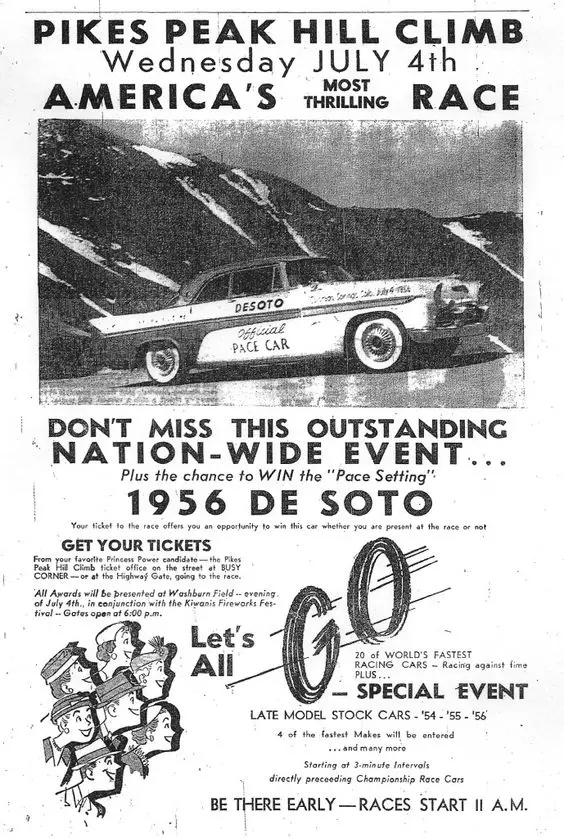
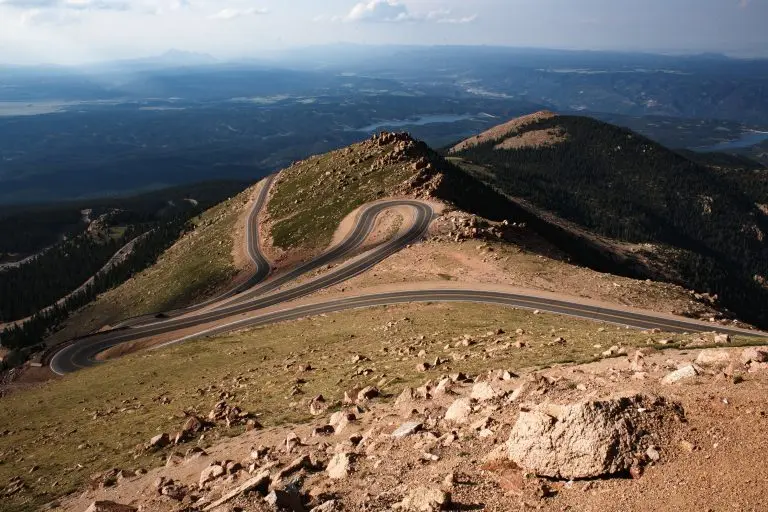
That summer, Western Horseman asked Dad to enter Alberta Minn in the Pikes Peak Marathon. On August 7, 1959, they climbed Barr Trail alongside the runners and reached the summit in 2 hours, 36 minutes and 10 seconds, the fastest time to the top of anyone in the race. Alberta Minn's time stood as the fastest ascent until 1961. She slipped on some rocks on the way up and bruised her leg, so Dad walked her back down rather than chase a round-trip record.
What the road taught him
Back home, Dad worked with his father the rest of that summer, and Alberta Minn was his horse for every bit of cattle work.
Whenever we did cattle work, I rode her, because I loved her. I loved that horse.
Listen: Robert Rapp Sr., in his own words. Recorded March 1, 2009.
Dad married my mother the next year, and Alberta Minn went with them. She gave them a colt, Destiny Minn. Later they took her back up to the Jolly ranch to be bred again. Not long after they brought her home in 1961, a lightning storm rolled through one night, and Alberta Minn was killed by a lightning strike.
"She was quite a horse," he said. "I loved her to death."
Those 1,500 miles gave my father a strong sense of identity and self-reliance. He also knew he didn't make it home alone. He made it because strangers along the way opened their homes, their barns and their grain bins to a kid and his horse. He spent the rest of his life living that way. If someone needed help, he was there. He was a farmer and rancher, and a baseball and boxing coach.
The road of life is never certain. Events can happen that we have no control over, whether it is the weather, an accident or our health. Thankfully, for many of us it is family, friends, faith and the people we meet along the way that help us through difficult times. This agency is dedicated to helping families, individuals and businesses manage risk and recover from the events we can't control.